Davis NAS Grad Students
  • Symposium 2018
  • Current Students
  • Blog
  • Grad Student Assoc.
  • NAS Alumni
  • Symposium 2017
  • SYMPOSIUM 2016
  • Symposium 2015
  • symposium2014
  • symposium2013
  • symposium2012
  • lyngsymposium
  • UCD Native American Studies

WATCH IT: UCD Grad Students work on a project to promote Native American artists from Northern California

10/31/2011

0 Comments

 
UCD NAS Graduate Students Cutcha Risling Baldy and Brook Colley worked as part of the "Native Arts, Voices & Perspectives Project" which completed artist feature videos about Native American artists from Northern California. The project was completed by the Native Women's Collective where Cutcha and Brook are both members. From the Native Women's Collective Website:

Thanks to a grant from the Seventh Generation Fund and support from the Ink People Center for the Arts and Center for Indian Community Development we are so happy to be premiering the first of THREE videos about some of the local artists from the Northern California area. The first video featured is for artist Marlette Grant- Jackson.  Featured artists for these videos include: SuWorhrom David Baldy, Kateri Masten, Marlette Grant-Jackson and David Mata.

Cutcha Risling Baldy was the director and project coordinator for the videos. Brook Colley worked as the videographer. This is the first of three videos.
0 Comments

READ IT: Two NAS Grad Students featured in News Article about presenting at the California Indian Conference!

10/30/2011

0 Comments

 
UCD NAS Grad Students Lori Laiwa and Abel Ruiz are both quoted in the article about the California Indian Conference which was held this past weekend. Many of the UCD NAS Grad Students and faculty were there and some presented!

FROM THE ARTICLE:  Lori Laiwa, a Pomo, and Abel Ruiz were both UC Davis graduate students who traveled to Chico to visit and present during the conference. They met up with a professor Laiwa knew from San Francisco State University, Kathy Wallace, who describes herself as a Karuk, Mohawk, Yurok and a member of the Hupa Valley tribes.

Laiwa and Wallace said they attend many such conferences, and it is always a pleasure to see old friends. In addition, both women presented on recent research and participated in several workshops. Ruiz also presented on his research topic, addressing the crowd on the Native American Gravesite Protection and Repatriation Act.

"It's a place where indigenous people can share their projects," Ruiz said.

To see the full article click here
0 Comments

Read it: UCD NAS Grad Student Brook Colley publishes a book review in American Indian Quarterly!

10/29/2011

0 Comments

 
Congratulations to Brook!

The American Indian Quarterly
Volume 35, Number 4, Fall 2011E-ISSN: 1534-1828 Print ISSN: 0095-182X
Decolonizing the Lens of Power: Indigenous Films in North America (review) 

Brook Colley
You can find the the entire review here: http://muse.jhu.edu/journals/american_indian_quarterly/summary/v035/35.4.colley.html

An excerpt: Kerstin Knopf's book Decolonizing the Lens of Power: Indigenous Films in North America focuses on Native American and First Nations films and filmmakers as they create what she calls an "answering discourse" to the media-validated colonial discourse. Knopf samples a variety of Native American filmmaking genres, including documentary, short films, and full-length narrative films, providing a detailed synopsis and content analysis of several films. Since its genesis in the early 1900s, film has been an effective colonizing tool, impacting Indigenous peoples around the globe. Films varied from ethnographic documentaries depicting "exotic" and "vanishing" tribes to Hollywood narrative cinema depicting Natives as a savage race that must be exterminated or subdued to make room for Christian civilization. Like many forms of media, film has been used by those with power to generate propaganda, manufacture stereotypes, foster racism, and create in the popular imagination widely accepted justifications for genocide, land theft, and other forms of oppression. Both Canada and the United States have used state-sponsored films to legitimate their settler governments and land claims within their borders. As filmmaking became an accessible visual art form for Native American and First Nations peoples, it became a medium and tool used to express creativity, educate, and advocate for change.

Picture
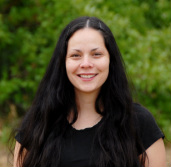
Brook Colley is an enrolled member of the Eastern Band of Cherokee Indians of North Carolina with Wasco, Japanese, and Irish heritage. Brook was raised in Corvallis, Oregon, attended Southern Oregon University, and is now a graduate student in Native American Studies at University of California Davis. Her research interests include Tribal health and healing; Oregon Tribes; Kiksht speaking peoples; Indian Gaming and the Indian Gaming Regulatory Act; Federal Indian policies and laws; Native American Graves Protection and Repatriation act; videography sovereignty; and Contemporary forms of resistance, sovereignty, and self-determination; Tribal governance and community development; Native women; Native art as a form of resistance; Cherokee Pottery revivals. Learn more about her here. 


0 Comments

Please welcome our new NAS Graduate Student Representative: Matthew Casey!

10/25/2011

0 Comments

 
Picture
Matt studies indigenous religion in the Andes, specifically focusing on contemporary religious performance in the region of Cuzco, Peru. He recieved his B.A. in Religious Studies from the College of Charleston in '09 and M.A. in Religious Studies from UC Riverside in 2011. He is currently pursuing his PhD in NAS. Matt loves music and surfing and misses his family back in Rhode Island and Massachusetts.

0 Comments

NAS Grad Student Christine Willie tells us how she spent her summer

10/10/2011

0 Comments

 
Picture
Dissertation Proposal, Family, Sheep, Weaving, and Roller Coasters

By: Christine M. Willie

As a recipient of the Social Science Research Council Dissertation Proposal Development Fellowship (SSRC DPDF), I began my summer attending the SSRC Spring workshop held in Monterrey, California. There, I met my Global Indigenous Politics cohort. With the help of our two research field advisors, Dr. Tony Lucero and Dr. Brett Gustafson, we spent four days further developing our proposals, preparing for preliminary fieldwork experience, and explored the beauty of Monterrey. 

Picture
After the workshop, I traveled by New Jersey to visit with family. Although time passed quickly, I did manage to unwind from the spring quarter and watch Iron Man with my nephew about 15 times. Before I knew it, I had to say goodbye and head to Arizona and Diné Bikeyah (Navajo Nation). 

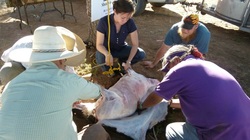
Once back in AZ, I visited with my grandparents, aunties, uncle, and cousins in Tolani Lake, Winslow, Phoenix, and Tucson. Then, I headed to Tsaile to attend a Traditional Diné Sheep Butchery Workshop that was part of the yearly Sheep Is Life event. During this weeklong event I met many members of the sponsoring organization Diné be’ Iiná: The Navajo Lifeway, Inc (DBI). We learned about the Churro Sheep, its role to Diné, and enjoyed everyone’s company and stories. During this week, I also began the journey of tracking down the process of securing the Navajo Nation’s approval to conduct research (NN HHRB). 

Picture
Although, I found really helpful advice from my bizhí, members of DBI, faculty at Diné College, the Navajo Nation Human Research Review Board, and the Navajo Nation Historic Preservation Department, I was informed that the process could take as long as a year. So I started research for the applications right away. 

Following the workshop, I drove to Tucson to visit my bizhí and cousin. While down there I hung out at cafes near UofA, ate sushi for the first time, read Craig Womack’s Red on Red, andvisited Biosphere 2. 

Picture
After my mini-vacation week, I returned back to the rez, began research in the archives of the Navajo Nation Library, and continued my course work at Diné College. I took Navajo Language and Weaving classes on the Tsaile and Window Rock campuses. 

Picture
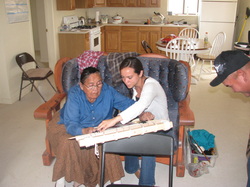
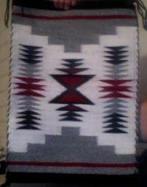
Although my nalí is a weaver, I never learned the whole process of weaving. This summer, she passed down some of her tools to me and I began. Learning from her and attending classes with other weavers, I wove my first rug. This was my biggest accomplishment throughout the summer. I gifted my first rug to her and now I am weaving a rug for my parents.

Picture
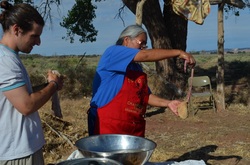
One weekend my partner, Diego, came to visit. We went to Chaco Canyon, Albuquerque, and Ganado. Playing the roles of tourist, we photographed everything, hiked in canyons, wandered around cities, and took in the air that had just begun to clear up after the devastating summer wild fires. During Diego’s visit, he participated in his first sheep butchery, sponsored by DBI. I don’t know if he enjoys mutton as much as I do, but he definitively had a great time. My dad came out to visit too. We spent time at my nali’s house visiting family, barbequing, chatting, playing cards, and eating mutton stew.

Picture
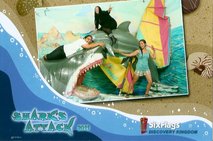
After two months on the rez with friends and family, it was time to return back to Davis to teach an Intro to Native Literatures summer session class. I drove from Tolani Lake to Davis with my cousin, who is the craziest driver in the world. Although I almost died on the ride, I was glad he was there because it made leaving Arizona less depressing than usual. In Davis, I began synthesizing my initial findings from my archival research at the Navajo Nation Library, started IRB applications, and finalized my NAS5 Fall 2011 syllabus. It wasn’t all work though. With my NAS cohort, we went camping, road the roller coasters at Six Flags, enjoyed white wine, and avoided becoming bear snacks. I even found time to attend one of my best friend’s wedding and barrel race with my horse, Jigsaw. 

Picture
My summer ended just as it began, meeting up with my SSRC DPDF Global Indigenous Politics cohort for our final workshop in Philadelphia. Over the four-day workshop, we continued to edit each other’s grant proposals, discuss the new directions of our dissertation projects, and share exciting stories from our taste of fieldwork experience. Although we headed back to our distinct departments from universities located all around the United States, our collaborations will continue and we look forward to meeting up at the 2012 NAISA meeting.  

Picture
I feel as if my project is beginning to become more concrete. As I envision an outline, I can’t help but compare this dissertation process to weaving. My bizhí wrote about this relationship between her academic work and weaving in the acknowledgements of her Ph.D. dissertation: “Linguistics is like weaving. You find one strand of color and follow it through the rug. You can’t follow every strand you want. For a weaver, it was easier to investigate one strand at a time […] To my Grandmother, there is more than one way to weave.” My loom is warped; the edge cords are in place; now, it is time for me to pick one strand of color and follow it through. Which color will I start with?

About Christine Willie: Yá’át’ééh. Shí éí Christine Willie yinishyé. Dóone’é nishlínígíí éí Italian nishlí, Kinyaa’áanii báshíshchíín, Italian dashicheii, Tséníjíkiní dashinálí. Kótéego ólta'í nishlí. Ahé´hee. Christine is Italian and Diné. She holds a B.A. in Spanish and Foreign Language Education (Rowan University), M.A. in Latin American Literature (University of Maryland, College Park) and is currently a Ph.D. student in Native American Studies (UCDavis). Her research interests include Indigenous epistemologies and philosophies, Native American literatures, colonial and post-colonial studies, decolonization methodologies, weavings, and sheep. more
0 Comments
    Picture

    RSS Feed

    Welcome!

    Welcome to the Davis Native American Studies Graduate Student Blog. This blog was started as a place to update on all of the amazing work that is being done by the Graduate Students in the UC Davis Native American Studies Department. The Graduate Program in Native American Studies was approved in 1998, making UC Davis only the second university in the nation to offer a Ph.D. in Native American Studies. In Fall 1999, the Department welcomed its first group of students enrolled in the M.A. and Ph.D. Programs in Native American Studies.

    Links

    Picture
    UC Davis Native American Studies
    UC Davis Graduate Studies
    Designated Emphasis

    Archives

    May 2016
    February 2016
    August 2015
    June 2015
    April 2015
    March 2015
    June 2014
    May 2014
    April 2014
    March 2014
    February 2014
    November 2013
    October 2013
    September 2013
    August 2013
    June 2013
    May 2013
    March 2013
    January 2013
    October 2012
    August 2012
    June 2012
    May 2012
    April 2012
    March 2012
    February 2012
    January 2012
    December 2011
    November 2011
    October 2011
    September 2011
    August 2011
    July 2011
    June 2011
    May 2011


    Categories

    All
    2020 Intiative
    Abel Ruiz
    Absolutely True Diary Of A Part Time Indian
    Alumni
    Amber Bill
    Angel Hinzo
    Awards
    Bayu Kristianto
    Bear Grass Braiding
    Book Reviews
    Brook Colley
    California Indian Conference
    Call For Papers
    Campus Community Book Project
    Christine Willie
    Committees
    Community Workshops
    Conferences
    Congrats
    Current Students
    Cutcha Risling Baldy
    Documentary Film
    Engaging The Indigenous Americas
    Fellowships
    Film
    Gatherings
    Graduate School Tips
    Graduate Students Association
    Graduate Student Symposium
    Graduate Symposium
    How I Spent My Summer
    Igps
    James Sarmento
    Kristina Caspter-Denman
    Language Revitalization
    Lori Laiwa
    Matthew Casey
    Meetings
    Melissa Leal
    Nagpra
    Nas Graduate Student
    Nas Graduate Student Association
    Nas Graduate Student Symposium
    Native American Culture Days
    Native American Faculty And Staff Association
    Native Womens Collective
    Navajo Oral History Project
    Nicole Blalock
    Nikki Morgan
    Office Of Graduate Studies
    Patricia Killelea
    Photography
    Poetry
    Presentations
    Press
    Publications
    Robin Thomas
    Sherman Alexie
    Silvia Soto
    Sponsors
    Stephanie Lumsden
    Student Profiles
    Study Abroad
    Symposium
    Symposium Sponsors
    Traditional Workshops
    Tule River Reservation
    Uneasy Remains
    Wren Usdi Productions
    You Tube


    Disclaimer

    This blog is an independent site run by the NAS Grad Students at UCD. The views expressed on this website are not the views of UC Davis Native American Studies nor the University of California Davis and/or its affiliates.

Powered by Create your own unique website with customizable templates.